This is default featured slide 1 title

Go to Blogger edit html and find these sentences.Now replace these sentences with your own descriptions.This theme is Bloggerized by Lasantha Bandara - Premiumbloggertemplates.com.

This is default featured slide 2 title

Go to Blogger edit html and find these sentences.Now replace these sentences with your own descriptions.This theme is Bloggerized by Lasantha Bandara - Premiumbloggertemplates.com.

This is default featured slide 3 title

Go to Blogger edit html and find these sentences.Now replace these sentences with your own descriptions.This theme is Bloggerized by Lasantha Bandara - Premiumbloggertemplates.com.

This is default featured slide 4 title

Go to Blogger edit html and find these sentences.Now replace these sentences with your own descriptions.This theme is Bloggerized by Lasantha Bandara - Premiumbloggertemplates.com.

This is default featured slide 5 title

Go to Blogger edit html and find these sentences.Now replace these sentences with your own descriptions.This theme is Bloggerized by Lasantha Bandara - Premiumbloggertemplates.com.

Sunday, September 29, 2013

Thai Deputy PM off to Yangon for Dawei JCC meeting

The Nation
Thai Deputy Prime Minister Niwatthumrong Boonsongpaisan yesterday flew to Yangon to attend a meeting of the Thai-Myanmar Joint Coordinating Committee (JCC) with Myanmar and Japan over the Dawei development project.
As JCC president, Myanmar is hosting the tripartite talks in Yangon. This will be the first time Japan will be joining the talks after being invited to invest in the project. 
Japan was invited as an observer at the joint high-level meeting committee last June, said Arkhom Termpittayapaisith, secretary-general at the Office of the National Economic and Social Development Board. However, Arkhom said Japan had not decided whether to invest in the Dawei project because of the huge outlays required. 
The meeting will report progress in infrastructure projects such as road development, the deep-sea port, the industrial park, the township in the industrial park, and development of the electricity and water systems. 
Arkhom said Japan wanted to hear Thailand's opinion and also to know how committed Myanmar was to investing in this project. In general, government will have to invest in the mega-project, especially in infrastructure, to persuade investors to get on board and strengthen their confidence for the long term.
The meeting will also discuss progress in establishing a Special Purpose Vehicle (SPV) as investment legislation is approved by Myanmar's parliament. This would give investors clearer information on what privileges the government can offer.
Project management and the regulating role of the SPV will be considered. The SPV will be a company holding the Dawei project concession. It will define the direction of infrastructure investment - for example, whether a project will be solely the government's responsibility or will be a joint investment of the government and the private sector.
The talks will also focus on planned roadshows abroad to attract investors. Hiring of a consulting firm to evaluate Italian-Thai Development is under consideration. The firm has initially invested in the project to clear area for roads and port facilities. The meeting will also discuss moving the local community out of the area.

Friday, September 13, 2013

Illegal exports/imports to land jail time in Myanmar

Illegal trade control team inspecting at Warden jetty during the training period (Photo - EMG)
The Myanmar government will apply prison sentences and seizure of goods to any illegal exports/imports.
In the past, illicit traders were merely charged a discretionary fine for their offence. They could later claim back their illegal goods by paying the fine.
However, dishonest exporters and importers will be punished harsher from September 16 onwards in accordance with the new Export-Import Law (2012), the Central Committee for Control of Illegal Trade (CCCIT) recently announced.
Under the new Export-Import Law, confiscation of goods and imprisonment of up to three years will apply if a person is convicted of exporting and importing restricted goods, failing to obtain licenses for those license-required goods, and breaching any license terms.
According to the law, those who either assist or engage in illicit activities will be punished to the same extent.
The CCCIT said they have completed the training period for enforcement of the new law.
Between August 12 and 31, they solved 17 cases in which consumer goods such as cosmetics, food, and construction materials—as well as restricted goods, including beer—were to be illegally imported.
The CCCIT was formed by the President’s Office in December 2012 with the mandate of curbing illegal practices in Myanmar’s border and overseas trades.

Myanmar’s foreign investment hits US$43 billion

                        Lapataungdaung copper mine project (Photo-Hein Min Htet)
  
Total foreign investment in Myanmar hit US$43 billion in August, according to Myanmar Investment Commission (MIC).
Over 600 foreign businesses invested a total of $43.68 billion in twelve sectors as of August 31, MIC reported.
“Myanmar has foreign investments from 32 countries in four major sectors: energy, oil and gas, mining, and manufacturing,” said an official from MIC.
China is the biggest investor in Myanmar, followed by Thailand, Hong Kong, South Korea, Britain, Singapore, Malaysia, France, Vietnam, and India.
Thailand is the largest importer from Myanmar. As much as 41 percent of Myanmar’s total exports went to Thailand last year, while 15 percent went to India, 14 percent to China, seven percent to Japan, four percent to South Korea, two percent to Malaysia, and one percent each to Singapore and Bangladesh, respectively.
Myanmar imported mainly from China, as usual, in 2012. A total of 37 percent of Myanmar’s imports came from China, while 20 percent came from Thailand, nine percent each came from Singapore and South Korea, eight percent from Japan, four percent from Malaysia, three percent each from India and Germany, one percent from Vietnam, and five percent from other countries.
The International Monetary Fund expects the GDP (gross domestic product) of Myanmar to increase to 5.5 percent in 2013 and 6.2 percent in 2014. The consumer price inflation is also forecast to increase to 7.3 percent in 2013 and 6.6 percent in 2014, respectively.
Myanmar’s total trade volume in 2012 was $25.16 billion. The trade deficit reached $5.76 billion because total exports stood at $9.69 billion and total imports were $15.46 billion.

Wednesday, September 11, 2013

Tuesday, September 10, 2013

UK mulls switch to plastic bank notes

               Australia uses tear-resistant polymer bank notes. Photograph: William West/AFP/Getty

The Bank of England is considering introducing plastic bank notes and will release details of its plans later on Tuesday.
Notes made of polymer, a plastic-like material, are thought to be more durable than notes printed on cotton paper, as they are currently in Britain.
Such shinier, non-tear notes are already used in a number of countries, including Canada, the home country of the new Bank of England governor, Mark Carney.
According to the Bank of Canada, they last at least 2.5 times longer than paper notes, "reducing processing and replacement costs and environmental impact".
This will be the second time bank notes have grabbed headlines for Carney since he arrived in July. During his first week in the job he sought to quell a growing row over the lack of female historical figures on British bank notes and later confirmed that the author Jane Austen would appear on £10 notes.
Carney, who introduced the polymer notes during his tenure at the Bank of Canada, has objected to them being called "plastic". In an interview with Britain's Channel 4 at the Austen note launch this year, he said: "We introduced polymer notes in Canada … There's no decision on that. In keeping with transparency and consultation, if we were to consider moving to polymer notes, which have some advantages, if we were to consider that, we would have a public consultation and announce that in due course."

BEC-Tero plans to build TV studios in Yangon

Watchiranont Thongtep
The Nation
Under its plan to make Myanmar its second television-production base, Thailand's BEC-Tero Entertainment aims to build its own studios in Yangon to respond to increasing demand for TV programmes from broadcasters in that country.
Pongpunt Wongnongteoi, strategic planning director at the company, said that in the remaining months of the year, BEC-Tero would invest in new TV studios, though the cost has not been disclosed. These studios will help its joint venture Forever BEC-Tero co-produce drama programmes and talk shows for Channel 7 in Myanmar. 
Forever BEC-Tero is a JV with Myanmar broadcaster Forever Group, the operator of free-to-air Channel 7 and MRTV-4. The group also runs a number of radio stations and about 70 pay-TV channels, including 10 digital channels and seven high-definition ones.
Pongpant explained that because of the limited capacity at Channel 7's studios in Yangon for production of new TV programmes, the construction of new studios was seen as the solution. The company is looking for the best location for these new facilities. 
He said the company had received requests from the Myanmar broadcaster for more programmes for its TV stations, almost double the current production. 
Under this partnership, BEC-Tero, which is a sister company of Bangkok Entertainment Company, the operator of Thai TV Channel 3, aims to share its expertise in TV and radio production or even event-organising skills with teams in Myanmar.
BEC-Tero aims to use Myanmar as the second base for its entertainment and sports business in the region once the ASEAN Economic Community arrives in two years.

South Korea to construct natural gas and waste-fired power plant


                                 The project site to build the plant in Yangon (Photo - EMG)

A South Korean company plans to invest between US$500 million to US$700 million to construct 500 Mega watts gas-fired and waste-fired power plant, according to company sources.
The state-owned Korea Western Power Corporation will implement the project in cooperation with Myanmar’s Hexa Group of Companies. The plant will be located in Yangon and is the first foreign investment in the electricity generating sector in line with the Foreign Investment Law.
"Our company will work together with the Korean company as a local partner. We have already signed Memorandum of Understanding (MoU) with Ministry of Electrical Power. We will start implement the project once we finished the deal. Now we are levelling the ground with sand and making ground testing. We will construct the project in 50 acres land plot next to Tharkayta power plant owned by the ministry," said Dr. Sone Han, Chairman of Hexa Group of Companies.
The project is mainly intended to provide electricity to Thilawa Special Economic Zone. Currently the company is in negotiation with the Ministry of Electrical Power and doing its own environmental impact assessment for the project, according to Mr. Lim Soung Tai, Managing Director of the Korean company.
Korea Western Power Corporation is owned by the South Korean government. Myanmar Investment Commission has already allowed Toyo-Thai Corporation Public Company to use Build-Operate-Transfer system to build a natural gas-fired and waste-fired power plant in Yangon in January 2013.

Myanmar Business and Development Week - Unleashing Myanmar’s Potential

Economic and Social Commission for Asia and the Pacific (ESCAP) will spearhead a series of workshops and talks designed to further strengthen the capacity of Myanmar’s private sector and equip the Government of Myanmar with the tools and knowledge to create a supportive business environment.
The so-called Myanmar Business and Development Week will take place Sept 23-27 in Yangon in partnership with ESCAP Business Advisory Council (EBAC) and the United Nations Trade and Productive Capacity Cluster and in association with Union of Myanmar Federation of Chambers of Commerce and Industry (UMFCCI).
“Over the course of five days we will deal with the crucial task of equipping all our participants with the necessary tools to promote, learn and also question diverse issues in creating an enabling and successful business environment”, said
Marc Proksch, Chief of the Business and Development Section in Trade and Investment Division, ESCAP.
Participants will have the opportunity to attend more than 20 specialised lectures and technical sessions. Following the themes “Creating Value at Home and Abroad” and “Enhancing Competitiveness”, the sessions will cover topics including “FDI Policies and Strategies for Inclusive and Sustainable Development”, “Global Value Chains and Enterprise Clusters”, “Designing Supply Chains for Success”, “Women Entrepreneurship in Agro-business”, “Development of a National Export Strategy” and “Social Media for Business.”
Myanmar is seen to have a huge potential. It is rich in natural resources with a young workforce and is geographically close to Asia’s most dynamic trading economies. But Myanmar, like other Least Developed Countries (LDCs), has not been as successful in effectively integrating into the regional and global economy despite membership of the WTO and ASEAN. It has weak trade and investment linkages with ASEAN and other neighbouring countries, such as China and India.
This is in part due to its past isolation; as Myanmar undergoes reforms it is offering opportunities for trade- and investment-led inclusive growth. “We all have witnessed Myanmar embarking on a major set of reforms manifested mainly through increased international trade and foreign investment”, said Proksch. Yet, Myanmar needs to prepare for the ASEAN Economic Community in 2015.
Increasing integration can bring numerous benefits starting with better employment opportunities and greater household purchasing power. Broader linkages with trading partners can facilitate economic diversification, enhancing resilience to external shocks. Recognising a pressing need to assist LDCs with better integration into global and regional trade and value chains, ESCAP has developed a specially designed programme of capacity building to support LDCs.
Business and Development Week is supported by Japanese and Korean governments and will take place at Union of Myanmar Federation of Chambers of Commerce and Industry (UMFCCI), No.29, Min Ye Kyawswa Road, Lanmadaw Township, Yangon.
Among the speakers are Chote Sophonpanich, EBAC Vice Chairman and Executive Chairman of Green Spot Thailand Co, and Chairman of Krungdhep Sophon Pcl, Mr. U Win Aung, President of UMFCCI,
Mr. Ashok Nigam UN Resident Coordinator/Humanitarian Coordinator and UNDP Resident Representative; H.E. Mikio Numata Ambassador of Japan to The Union of Myanmar.
=======================================
For further information, please contact:
Ms. Francyne Harrigan, Chief, Strategic Communications and Advocacy Section, ESCAP
T: (66) 2 288 1864 / M: (66) 81 835 8677 / E: harriganf@un.org

Saturday, August 31, 2013

Asia World Company to provide electricity for Bago region

An area of Yangon city with power blackout seen this year (Photo:EMG/Myo Min Htet)
Myanmar's Asia World Company has recently been granted permission to distribute electricity to 37 townships in Eastern Bago Region.
Asia World Group is Myanmar’s largest and most diversified conglomerate, which interests in industrial development, construction, transportation, import-export, and a local supermarket chain.
About half of Singapore’s investment in Myanmar comes through Asia World affiliates.
The Asia World Company.
The company is one of 20 private enterprises recently granted permission by Myanmar's government and President Thein Sein to supply electricity to 84 townships in other states and regions.
The winner companies are Gold Energy Limited, which is a subsidiary of Asia World Company, Ruby Dragon Construction, Capital Development, Eden Energy and Natural Resources Development Company.
Private power distribution companies will generate and supply not only electricity to the national grid but also reserve electricity when electricity cut off and power voltage is low.
Moreover, the companies have submitted the proposals to generate reserve power from coal-powered plants or natural gas-powered plants.
While the government outsources power distribution to private companies, there is yet no law in place that sets a standard for electricity supply and costs. Neither was any official announcement made about the contracts.
Many recognise the urgent need to upscale electricity production in Myanmar to meet a growing domestic demand for both businesses and private consumption. But many fear that a lack of regulation will lead to lack of accountability and exorbitant prices.
"If the industrialists invest in private power distribution enterprise, the public can enjoy more electricity. But, they [public] can’t get the electricity charges at the current price," an official from Yangon Region Government Committee said at a recent seminar held at the Sedona Hotel in Yangon.

MoneyGram expands funds-transfer service to Myanmar via alliance

The Nation
MoneyGram, a leading global money-transfer company, has announced that its international service will be available in Myanmar and will be provided through an alliance with three banks: Asia Green Development (AGD) Bank, Myanmar Citizens Bank (MCB) and Tun Foundation Bank (TFB).
"We are happy to announce that we will be reaching consumers in Myanmar through our alliance with these exceptional bank agents," said Grant Lines, MoneyGram senior vice president for Asia-Pacific, South Asia and Middle East. 
Its money-transfer services will be offered in 10 of Myanmar's 14 states, giving consumers access to affordable remittances. 
It is an important step for MoneyGram as it increases its global footprint and makes services available to more customers worldwide, he said. 
MoneyGram's initial services in Myanmar allow consumers to receive money securely from friends and family through these three banks, which have locations across the country. 
Each bank was selected for its reliability and reputation: MCB is a public bank, TFB is almost 20 years old and privately owned, and the parent company of AGD Bank owns the largest chain of banking businesses in the region. 
According to the World Bank, there were more than 510,000 Myanmar emigrants living across the globe in 2010. It is also estimated that about 2 million former Myanmar residents now work in countries including Thailand, Singapore, Japan, Australia and the United States. The move strategically positions MoneyGram to provide services to previously underserved Myanmar customers, and aims to bring customers closer through money transfers that can be made to and from locations across the globe, it says. 
With the launch of money-transfer services at these three banks, Myanmar consumers can receive funds from nearly 80 countries including Thailand, Malaysia, Japan, Singapore, Canada, the United Arab Emirates and Britain.

Myanmar real-estate summit to highlight infrastructure

The Nation
The second Myanmar Real Estate Summit (MRES), to be held in Yangon from September 30 to October 1, will hone in on pivotal issues, critical for investing in that country's real-estate development and property sector.
The sector is booming as investors respond positively to the country's economic and political reforms. Burgeoning demand and new opportunities are attracting investments from around the world. 
The extent of this can be judged by the fact that Yangon enjoys the highest property prices in Southeast Asia. The explosion in tourism is also leading to an acute shortage of hotels, residential buildings and mixed-use projects. 
Apart from new projects, old and existing properties are being refurbished and repositioned for generating incremental revenue.
New at this year's MRES is the spotlight on infrastructure developments, incentives for investments in special economic zones like Thilawa and Myothar Industrial Zone Park, the landscape of hotels and resorts in key tourist attractions such as Mandalay, plus discussions on financing and commercial terms including guidelines on land ownership and structuring joint ventures.
The summit will open with a welcoming address by the chairman of the Htoo Group of Companies, to be followed by a presentation on "Urbanisation of Yangon City: Master Plan and Outlook" by a senior official of the Yangon City Development Committee. 
Then there will be another address on "Mandalay as a Tourism and Industrial Hub" by a senior official from the Mandalay City Development Committee.
Among expert speakers from the real-estate industry will be Richard Leech, executive director for retail services at CB Richard Ellis (Vietnam) Co. He is slated to speak on "Retail Sector - Futurescape in Myanmar". 
Also on the speaker panel are Masaki Takahara, executive managing director of the Japan External Trade Organisation, with a presentation on "Infrastructure and Industrial Development: Thilawa Special Economic Zone", and Colliers International Myanmar managing director Tony Picon addressing the "Serviced Apartment Landscape in Myanmar".
The summit expects to draw regional and foreign property investors and developers, real-estate analysts, construction and engineering firms, consultants and brokerage firms, hoteliers, financiers and lenders, banks and financial institutions, asset managers and fund managers, real-estate funds, REITs, hedge funds and private equity, insurance firms, law firms, tax consultants, industry regulators and many more.

Wednesday, August 28, 2013

Myanmar housing development bank to open next month

The opening ceremony of Construction and Housing Development Bank ( Photo - EMG)
The Construction and Housing Development Bank Limited (CHDB) will open its first branch within a month, according to their managing director.
The bank was licensed on July 15 and aims to provide cheap housing through installment plans for low-income families, pensioners and government workers.
"We are planning to open a bank branch in one month. After opening, we are planning to buy shares concerning banks. We are arranging in detail for opening a bank branch,” said Win Zaw, Managing Director Win Zaw of CHDB.
The company aims sell up to 10 million shares at K 10,000 a unit. The CHDB will allow government employees, staff from private companies and international investors to invest in shares, according to the Ministry of Construction.
"For the low income public, we assume that a financial system which allows a 20 to 30 years long term settlement may be suitable for them. Only then can the low income public own an apartment. That’s why we are establishing CHDB,” said Minister for Construction, Kyaw Lwin on July 15.

Land Prices Soar in Muse As New Zone Attracts Chinese, Burmese Investors

RANGOON — Chinese and Burmese businessmen have been rushing to buy up land in a new economic zone in the border town of Muse, northern Shan State, causing local land prices to skyrocket, according to residents, who claim that prices have topped US$200,000 per acre.
“This is a big project and Chinese people really like it. Every day, many people from PRC [People’s Republic of China] come to purchase lands from that project zone. Generally, the buyers give two hundred million Kyats [about $205,000] for a one-acre plot,” resident Sai Aye said.
Such land prices are roughly on par with the market rate for land located on favorable locations, such as near roads, on the outskirts of Rangoon.
Earlier this year, Muse District authorities approved plans for the 288-acre (115-hectare) Central Economic Zone located on the banks of the Shweli River, which demarcates the Burma-China border. Burmese firms Great Hawkham Public Co Ltd and New Star Light Co Ltd were granted rights to develop the zone, government newspaper The New Light of Myanmar reported in June.
New Star Light Company has so far claimed about 200 acres (80 hectare) of land in the project area and offered $25,000 per acre in compensation to affected farmers, said Sai Kyaw, a Muse District farmer who sold his land.
Although this compensation sum is far above the rates that farmers in for instance the Thiliwa Special Economic Zone near Rangoon can expect, Muse residents were still disgruntled because Chinese investors were now offering even higher prices, according to Sai Kyaw.
“New Star Light Company started the project by giving 25 million kyat [$25,600] for each acre of farmland. But now, Chinese people buy the land that is not yet confiscated for the project for 100 million kyats [$105,000],” the farmer complained. “So, the owners of the confiscated farmlands feel really sorry. However, the companies are partly supported by the government. We cannot object to the project.”
Real estate development in Muse Central Economic Zone is said to include hotels, jade trading shops, supermarkets, recreation centers and business towers. A conceptual illustration of the completed project depicts a mix of futuristic high-rise buildings, malls and modern residential areas in the town.
Muse is located on the opposite riverbank of the Chinese border town Ruili, Yunnan Province. It is the country’s most important border trading post and functions as a conduit for the growing trade between Burma and Yunnan Province, which was valued at about $2.7 billion in 2011, according to Chinese state news agency Xinhua.
Sai Aik Maung, another local farmer, said he feared he would be forced to part with his farmland because Burmese firms and Chinese businessmen seeking to buy land had the support of local authorities.
He said wanted more than $25,000 per acre as he would be without a livelihood after he sells his land. “We have been farmers ever since the days of our grandparents. Now, even if we cannot continue as farmers, we want to get good prices for our farmlands,” Sai Aik Maung said.
Additional reporting by Paul Vrieze.

Golden Return: Serge Pun Constructs A Real-Estate Empire In Myanmar

This story appears in the September 2, 2013 issue of Forbes Asia.
    
The road to Star City is a rutted two-lane highway that threads past the ragtag outskirts of Yangon, crosses two rusted bridges and ends, almost an hour later, at a slick showroom on a grassy riverbank. A roadside billboard welcomes me to “A Model City of Tomorrow.” After a bumpy ride in monsoon rains the real estate showroom comes as a relief and something of a mystery. As a salesman clicks on interactive screens showing condominium designs and floor plans, I wonder who would choose to live out here in the boondocks.
Later I step outside and, as the rains pause, look upriver toward the city. And there, shimmering above the grimy streets, is the golden spire of Shwedagon, the Buddhist temple that is a symbol both of a nation’s ancient riches and popular resistance to five decades of military rule that ended in 2011.
Only then do I grasp the shiny promise of Star City and why local buyers are snapping up units aimed at middle-income families. The 400-acre site will eventually be linked by ferry to downtown and by road to a Japanese-backed port farther downriver. With a planned community of 25,000, it’s a self-contained commuter belt for a city with a population of 5 million that may double in the next 20 years, driving up land prices and pinching public services. It’s a bet on a promise of peace and prosperity.
The man behind Star City is Serge Pun, a former exile who returned to Myanmar in the 1990s to build a property-to-banking empire that came close to collapse a decade later. Reinvigorated by the political thaw, Pun is now tapping foreign capital and talent to double down on holdings like Star City that lay fallow during the dictatorship. Other Burmese tycoons are sitting on prize assets but could struggle to unlock their value compared with Pun, who is Myanmar’s top residential developer and among its richest men.
An ethnic Chinese, Pun is both an insider and a curious outlier in an opaque political economy geared to crony capitalism. He styles himself as a principled businessman who says no to corruption and isn’t afraid to make enemies. This dualism, the insider and outsider, is reflected in his penchant for gated suburban communities that circle the city. That said, his next big project, running in parallel with Star City, is a mixed-use redevelopment of 9.6 acres of prime downtown land that he’s sat on for two decades and is conservatively valued at $100 million.
His ambitions don’t end with real estate: First Myanmar Investments (FMI), his flagship, has interests in agribusiness, auto distribution, tourism, civil aviation and retail. Barely a month goes by without a new venture or spinoff. Pun’s impeccable image and overseas exposure have made him a go-to guy for Asian and Western firms seeking partners in Myanmar, a bridge between worlds. He has permanent residency both in Hong Kong, where he founded his first venture, and in Singapore, where he has a listed company, Yoma Strategic Holdings. “International companies consider us as foreign. Burma’s government consider us as a Burmese company,” he tells me.
Pun isn’t in Yangon when I visit Star City, so we meet instead in a hotel lobby in Beijing. With a shock of silver hair over an unlined forehead and rimless glasses the 60-year-old has a modest, avuncular air. During breaks he pops outside to smoke Al Capone-branded cigarillos. His reputation, though, is that of a shrewd and dogged bargainer. “He’s a great closer,” says a party to a recent transaction. When he pays for our drinks, he chides the Chinese waitress at length over an unwarranted charge on our $34 bill and vows to talk to the hotel manager. I’m left unsure if he’s putting on a show of frugality for me or is truly ticked off.
To his family and friends he’s Serge, an affable workaholic. “There’s no difference between personal life and work life; it’s always the same thing,” says Melvyn Pun, his eldest son and chief executive of FMI. Ken Mandel, an American who worked for Pun in the 1990s, says: “He loves what he does. It’s obvious.” Inside the company he’s known as S.P., perhaps to avoid confusion with the other Puns. His Burmese name is Theim Wai. But he’s proudest of being called Burma’s Mr. Clean, the man who dared to say no to the grasping generals. “I’ve never paid a cent. But I’ve never been short of opportunities,” Pun avers.
This reputation set him apart from tainted tycoons like Tay Za, one of dozens of individuals subject to U.S. financial sanctions. Most analysts agree that Pun is scrupulous in his governance and didn’t consort with the hated junta that stepped down in 2011. But “you don’t get where Serge is today without having some friends in high places,” says a foreign consultant, who discussed Pun on the condition of anonymity.
Analysts point to Pun’s extensive land holdings and a banking license acquired in the 1990s, when Myanmar’s corruption was rife. Yoma Bank would later have a near collapse during a run on private lenders. In 1997 FMI acquired a minority stake in a now-defunct joint venture between the regime and Suzuki Motors to assemble cars and motorbikes for a near-captive market.
Pun says that he works with pragmatists in government and that land and other concessions were awarded on the basis of performance, not favoritism. “We do things properly. We don’t cut corners,” he says. By refusing to compromise, Pun says he lost out on crony deals. “We paid a high price during the dark years, at the brink of elimination. We stood firmly to our principles,” he insists.
Pun is upbeat on Myanmar’s economic prospects after decades of stagnation and misrule. In the last 18 months he’s hired dozens of expat managers and returning Burmese, including three of his four foreign-born sons. This investment in foreign talent, and their willingness to relocate, is another aspect that sets him apart from local entrepreneurs and gives him credibility with multinationals.
However, it also jacks up his costs. Yoma Strategic reported an 81% drop in profits in the three months to June 30 on a doubling in administrative costs and a modest 12% year-on-year rise in revenues. A small net profit for the full year is forecast, but investors seem undeterred: Yoma’s stock is trading at over 80 times future earnings.
Myanmar doesn’t have a stock market, so shares in FMI, which Pun founded in 1991 and owns 70% of, are traded over-the-counter in Yangon. Both FMI and Yoma, which reverse-listed in Singapore in 2006, have issued new stock as investors dive into Asia’s newest frontier. These include George Soros, whose fund invested in Yoma and later teamed up with Pun and Jamaica’s Digicel to bid unsuccessfully for a wireless telecom license in Myanmar.
Yoma’s main revenue comes from property sales in Yangon, where prices have soared since 2010. “The demand is there. And the supply continues to fall short,” says Tan Ai Teng, vice president of DBS Vickers Research in Singapore. That makes Yoma, as Singapore’s only Burmese stock, a proxyplay on the market.

Japanese firm to invest in Myanmar agribusiness

                                        Fruits displayed at a Megumi No Sato store (Photo - Megumi No Sato)

 
Japan-based Megumi No Sato will join hands with Myanmar's City Mart Holding Company, to produce and sell vegetables and fruits, according to a company announcement.
Megumi No Sato is a popular company back in Japan and is part of the G-7 Group which specialises in selling quality vegetables from select farmers. The Myanmar Investment Commission (MIC) has granted a joint-venture permission to City Mart Holding according to the Citizen Investment Law.
The company will carry out cultivation of vegetables and fruits in Pyin Oo Lwin Township of Mandalay region, central Myanmar.
Megumi No Sato Company is now cultivating and selling agricultural products in Japan and it also provides support to farmers to create stable incomes for supplying fresh vegetable at a reasonable prices.
The Japanese government is eyeing to invest in production and selling of vegetables and fruits in Myanmar. This is the first Japanese private joint-partnership with a Myanmar company.
The MIC granted permissions to five other foreign investment enterprises and one citizen investment during a meeting held on August 21 this year.

Rice exports down but annual forecast positive

By THIKE ZIN (DVB)

Burma exported some 200,000 tonnes of rice between April and July, but that’s 100,000 tonnes short of last year’s figures.

According to the chairman of the Myanmar Rice and Paddy Traders Association, the 50 percent decrease in shipments is due to an increase in the Burmese rice price, a decrease in Indian prices, and adverse weather conditions.

The price per tonne for low-quality Emata rice (25 percent broken) in Rangoon today stands at US$360- $370, compared with $330 on the international market.

In addition, Burma has been hit with adverse weather conditions recently, with floods in the Irrawaddy delta and a drought in Upper Burma.

However, exports at the Sino-Burmese border are up significantly according to a local trader from Muse.

“Last week only 600 tonnes of rice passed through the border, but this week it’s up to 1,000 tonnes,” he said.

The chairman of Myanmar Rice and Paddy Traders Association, Aung Than Oo, remained upbeat, saying that while Burma exported some 1.4 million tonnes of rice in 2012, this year he expects the total to hit 2 million tonnes.

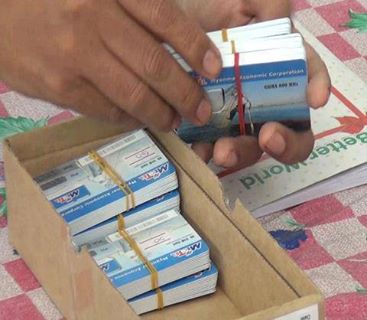
ေငြက်ပ္ ၁၅ဝဝ တန္ ဆင္းကတ္ ေစ်းႏႈန္းမ်ား ဆက္တိုက္က်ဆင္း လာေသာ္လည္း ေလွ်ာက္ထားသူ က်ဆင္းျခင္း မရွိ

Wednesday, 28 August 2013


ေငြက်ပ္ ၁၅ဝဝ တန္ ဆင္းကတ္ ေစ်းႏႈန္းမ်ားမွာ ဆက္တိုက္ က်ဆင္းလ်က္ ရွိေသာ္လည္း ရပ္ကြက္ အုပ္ခ်ဳပ္ေရးမွဴး ႐ံုးမ်ားတြင္ ေငြက်ပ္ ၁၅ဝဝ တန္ ဆင္းကတ္ ေလွ်ာက္ထားသူမ်ား ပိုမို မ်ားျပားလာေၾကာင္း သိရသည္။

ရပ္ကြက္ အုပ္ခ်ဳပ္ေရးမွဴး ႐ံုးမ်ားတြင္ ေငြက်ပ္ ၁၅ဝဝ တန္ ဆင္းကတ္ ေလွ်ာက္ထားၾကသူ အမ်ားစုမွာလည္း ေငြက်ပ္ ၁၅ဝဝ တန္ ဆင္းကတ္ မဲေပါက္ပါက ကိုင္ေဆာင္ အသံုးျပဳရန္ မဟုတ္ဘဲ ျပန္လည္ ေရာင္းခ်ရန္ အတြက္ ေလွ်ာက္ထားျခင္း ျဖစ္ေၾကာင္း သိရသည္။

ေငြက်ပ္ ၁၅ဝဝ တန္ ဆင္းကတ္မ်ားကို ရပ္ကြက္ အုပ္ခ်ဳပ္ေရးမွဴး ႐ံုးမ်ားတြင္ မဲစနစ္ျဖင့္ ကနဦး ေရာင္းခ်စဥ္ ကာလက ေငြက်ပ္ ၁၅ဝဝ တန္ CDMA, WCDMA ဆင္းကတ္မ်ားမွာ ျပင္ပ ေစ်းကြက္မ်ားတြင္ ေငြက်ပ္ ၈ဝဝဝဝ အထိ ေပါက္ေစ်း ရွိခဲ့ၿပီး ေငြက်ပ္ ၁၅ဝဝ တန္ GSM ဆင္းကတ္မ်ားမွာ ေငြက်ပ္ ၁၂ဝဝဝဝ အထိ ေစ်း ေပါက္လ်က္ ရွိေၾကာင္း သိရသည္။

သို႔ေသာ္ ယခုအခါတြင္ ျမန္မာ့ ဆက္သြယ္ေရး လုပ္ငန္း လုပ္ကိုင္ခြင့္ရ Telenor ႏွင့္ Ooredoo ကုမၸဏီ ႏွစ္ခုမွ ျမန္မာ့ ဆက္သြယ္ေရး ေလာကတြင္ 3G, 4G အစရွိေသာ Network မ်ားကို မၾကာမီ အေကာင္ အထည္ ေဖာ္မည္ဆိုသည့္ သတင္းမ်ားေၾကာင့္ ေငြက်ပ္ ၁၅ဝဝ တန္ ဆင္းကတ္ ေစ်းႏႈန္းမ်ားလည္း ဆက္တိုက္ က်ဆင္းလာေၾကာင္း သိရသည္။

''၁၅ဝဝ တန္ ဆင္းကတ္ ေစ်းႏႈန္းေတြက ဆက္တိုက္ က်လာတယ္။ အရင္က CDMA, WCDMA ေစ်းႏႈန္း ေတြက ၈ဝဝဝဝ ေလာက္ ေစ်းေပါက္ေပမဲ့ အခုဝယ္တဲ့ သူေတြက ေလးေသာင္းေက်ာ္ေက်ာ္ပဲ ေပးေတာ့တယ္။ GSM ေတြ မဲေဖာက္ေပးတာက တစ္ခုပဲ ရွိတယ္။ ပထမဆံုး မဲေဖာက္ေပးတဲ့ အခ်ိန္ပဲ ေပါက္ေစ်းေတြက ၁၂ဝဝဝဝ ေလာက္ ရွိခဲ့တယ္။ ဒါေပမဲ့ အခု ၇ဝဝဝဝ ေလာက္ပဲ ရွိေတာ့တယ္။ ဒါေတာင္ ဝယ္တဲ့သူေတြက နည္းနည္း ရွားသြားၿပီ'' ဟုယုဇနပလာဇာမွ ဖုန္း အေရာင္းအဝယ္ ျပဳလုပ္သူ တစ္ဦးက ေျပာၾကားခဲ့သည္။

ေငြက်ပ္ ၁၅ဝဝ တန္ ဆင္းကတ္ေစ်းႏႈန္းမ်ား ဆက္တိုက္ က်ဆင္း လာေသာ္လည္း ေလွ်ာက္ထားသူမ်ား ပိုမို မ်ားျပားလာေၾကာင္း၊ ေငြက်ပ္ ၁၅ဝဝ တန္ ဆင္းကတ္မ်ား မဲေပါက္ပါကလည္း မိုဘိုင္းလ္ဖုန္း အေရာင္းဆိုင္ မ်ားႏွင့္ ခ်ိတ္ဆက္၍ ျပန္လည္ ေရာင္းခ်ၾကေၾကာင္း သိရသည္။

''ဒီရက္ပိုင္း ရပ္ကြက္႐ံုးမွာ မဲေဖာက္ေပးမွာ။ မဲေပါက္ရင္ေတာ့ ျပန္ေရာင္းမယ္။ အခု ၁၅ဝဝ တန္ GSM ဆင္းကတ္ ေပါက္ေစ်းက ၈ဝဝဝဝ နီးပါး ရွိေသးတယ္လို႔ ၾကားတယ္။ ေနာက္ပိုင္း ျပည္ပကုမၸဏီေတြ ဝင္လာရင္ ဆင္းကတ္ေတြက ေပါလာမွာ။ အခုေစ်းရတုန္း ေရာင္း ရမယ္။ ျပည္ပကုမၸဏီေတြ ဝင္လာရင္ ဖုန္းလိုင္းကလည္း အခုထက္ အမ်ားႀကီး ေကာင္းမွာ'' ဟု ျပည္သူ တစ္ဦးက ေျပာၾကားခဲ့သည္။

တန္ဖိုးနည္း ေငြက်ပ္ ႏွစ္သိန္းတန္ ဆင္းကတ္မ်ားမွာလည္း ယခုအခါ ေငြက်ပ္ တစ္သိန္းခဲြ ဝန္းက်င္သာ ေပါက္ေစ်း ရွိေနၿပီး ေငြက်ပ္ ငါးသိန္းတန္ ဆင္းကတ္မ်ားမွာ ယခုအခါ ႏွစ္သိန္း ဝန္းက်င္သာ ေပါက္ေစ်း ရွိေၾကာင္း သိရသည္။
ျမ၀တီ 

Tuesday, August 27, 2013

Chinese authorities investigate PetroChina executives

by ; bbc
                         
Chinese authorities are investigating three senior executives of state-owned energy firm PetroChina over "serious breaches of discipline".
China's State-Owned Assets Supervision and Administration Commission, which oversees state firms, did not provide details of the breaches.
PetroChina said two vice-presidents and its chief geologist resigned on Tuesday because of "personal reasons".
The firm's shares fell as much as 5% in early trade in Hong Kong.
PetroChina said in a statement that Vice Presidents Li Hualin and Ran Xinquan as well as Chief Geologist Mr Wang Daofu "are currently under investigation by relevant People's Republic of China authorities".
It added that the three officials had resigned from their respective positions "with immediate effect".
On Monday, the Ministry of Supervision said that Wang Yongchun - another top official at China National Petroleum Corporation (CNPC), the parent firm of PetroChina - had been put under investigation. It did not provide any details about the probe.
In recent months Chinese authorities have been engaged in a high-profile anti-corruption campaign initiated by new President Xi Jinping, who has called corruption a threat to the survival of the ruling Communist Party.
Earlier this month, a former top economic official was expelled from the Communist Party and removed from public office.
State-owned Xinhua news agency reported that Liu Tienan, the former deputy head of the National Development and Reform Commission, had "accepted huge amounts of bribes".
In July, former Railways Minister Liu Zhijun was given a suspended death sentence for corruption and abuse of power.

Asia markets hit as Syria fears spark global sell-off

by ;bbc
              Asian stock markets have fallen, extending a global sell-off sparked by growing fears of a military strike against Syria.
Japan's Nikkei 225 index dipped 2.3%, Hong Kong's Hang Seng was down 1.3% while Australia's ASX 200 fell 1.1%.
This follows declines in US and European markets on Tuesday.
Speculation of a strike against Syria, also triggered fears over global oil supplies pushing up crude prices to an 18-month high.
Although Syria is not a significant oil producer, there are fears for the stability of the wider Middle East, which produces about a third of the world's oil.
"If Syria becomes drawn out and becomes a long-term issue, it's going to show up in things like gas prices,'' said Chris Costanzo, an investment officer with Tanglewood Wealth Management.
As well as the rise in Brent crude, the price of US crude jumped $3.09 to close at $109.01 a barrel.
'Worst-case scenario'
The fears of a strike follow reports of a suspected chemical attack last week near the Syrian capital, Damascus, which reportedly killed more than 300 people.
On Tuesday, US Defence Secretary Chuck Hagel said that American forces are "ready" to launch strikes if President Barack Obama chooses to order an attack.
President Obama is due to outline future US action on Syria in the coming days.
Analysts said that investors were concerned that the crisis may escalate and result in political and economic instability in the region.
"People worry about this becoming a worst-case scenario and turning into a regional conflict," said Bill Stone, chief investment strategist at PNC Asset Management.
On Tuesday, Germany's Dax and the French Cac 40 indexes ended down about 2.5%. In London, the FTSE 100 index closed down by 0.8%.
In the US, the Dow Jones fell 1.1% to 14,776.13, a two-month low.
Meanwhile, gold which is traditionally seen as a safe haven in times of uncertainty, rose $27 to $1,420 an ounce.
Risk premium
 The Middle East contains some of the world's biggest oil producers, along with some important shipping routes.
Even before the latest developments in Syria, analysts were forecasting higher oil prices, partly because of supply disruptions.
Libya, one of the Arab world's biggest oil producers, has seen its production drop by nearly 60% due to strikes and security concerns.
Analysts said the uncertainty over developments in Syria had added to the worries of oil supplies from the region.
"As the rhetoric ratchets up around Syria, the geopolitical risk premium in the price of oil is once again widening," said Dominick Chirichella, of Energy Management Institute.
Goldman Sachs has raised its short-term forecast for the oil price to $115 a barrel.


Brent Crude Oil Futures

$/barrel